Current change ledger
Naples Market Pulse
The canonical, evidence-dated change ledger for Naples real estate, public decisions, infrastructure, capital, and operating evidence.
Open on Intelligence Desk ↗
Bitcoin infrastructure for the built world.
Civic Bitcoin develops source-based public frameworks, research notes, and educational presentations at the intersection of Bitcoin, energy, infrastructure, urban form, public assets, and long-duration civic stewardship.
Civic Bitcoin develops the framework. Intelligence Desk tests local claims against the public record.
Broad Avenue, Naples, Florida. Photograph: Carol M. Highsmith — Library of Congress, Highsmith Archive (no known restrictions on publication).
A balance sheet forces honest questions. What does this asset earn? What is it carried at? What is being quietly written down — a dark storefront, a surface lot on valuable land, a flared gas stream, a stalled civic building — while the town tells itself everything is fine?
The Civic Balance Sheet is the intended analytical frame for published Civic Asset Dossiers and framework notes on this platform. Each asset is read as an entry: its current carry, its productive potential, and the gap between them. The gap is the work.
Parcels, corridors, districts — held productively or carried idle.
The public realm: the rooms of the town, earning or losing daily.
Civic and private stock — maintained assets or deferred liabilities.
Generation, interconnect, and byproduct power — worked or wasted.
These entries have a physical shape, and the shape is drawn. The figure-ground plan reads the town as fabric: private buildings as figure, streets and squares as the void that serves them, civic anchors marked apart, and the five-minute walk measured from the square.
Every drawing on this platform is an original working document in the town-planning tradition — plans, transects, and sections, drawn in-house.
Civic Bitcoin works in the vocabulary of town planning — the tradition carried by the Charter of the New Urbanism: the region; the neighborhood, district, and corridor; the block, the street, and the building. Settlement runs in a gradient from natural land to the urban core, and the assets this platform studies — buildings, energy systems, public land, utility districts — concentrate at the urban end of that gradient and in the special districts beside it.
Power, Premium and Place adds six explicit tests for urban utility, monetary premium, defensive burden, energy and security, local externalities, and civic verification. Jason P. Lowery's power-projection theory is the declared influence; every local conclusion still requires local evidence.
Read the framework →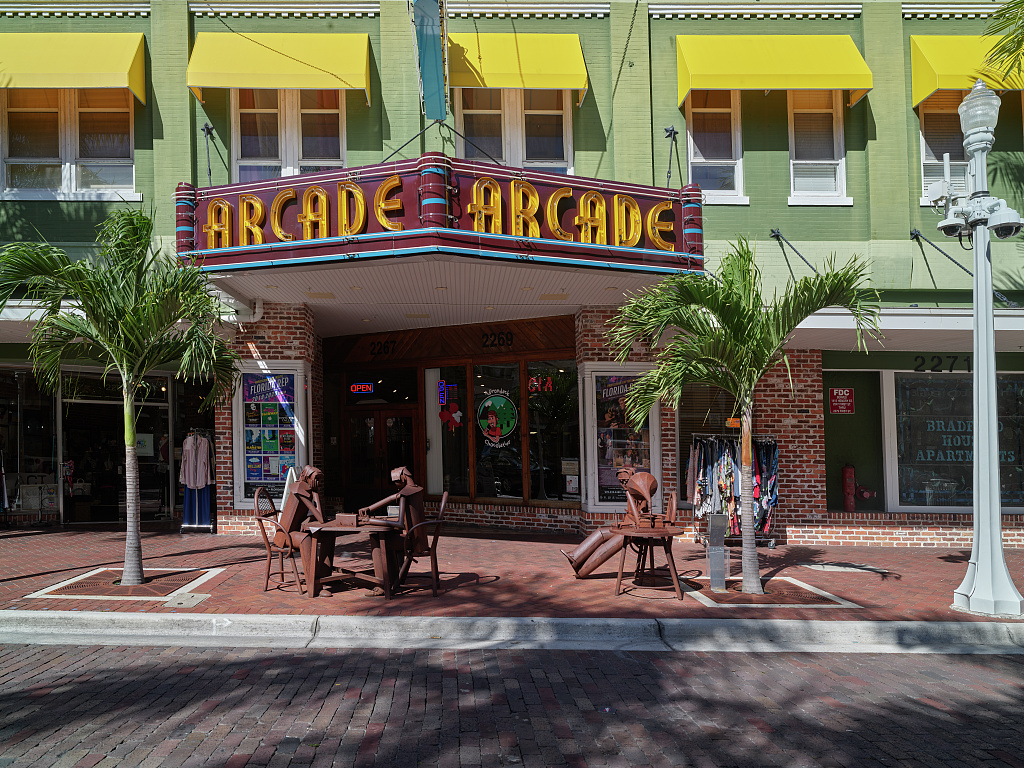
The public realm is the part of the balance sheet everyone owns. A street that people want to stand on — shaded, fronted, walkable — raises what every adjoining parcel can earn; a street nobody would stand on writes those parcels down. Civic form is not decoration. It shapes access, use, maintenance burden, and the economic context around adjoining parcels.
The doctrine page carries the full drawing set — the figure-ground comparison and the dimensioned main-street section — and states what this framework asks of every civic asset.
A Civic Asset Dossier reads one public or civic asset the way an owner with a long horizon would: what it is, what it earns, what it is carried at, who controls it, and what its documents actually say — material factual claims pointing to identified sources.
Dossier #001, The $1 Airport, examines Naples Airport through its lease, governance conflict, federal obligations, and commercial-service pressure. The $1 figure is reported annual lease rent, not a purchase price or redevelopment-land option.
Intelligence Desk is the canonical source for changing public-record, market, civic, and political evidence. Civic Bitcoin links to that record rather than republishing it. Civic Bitcoin does not mirror the dated market feed; the cards below open its canonical Intelligence Desk surfaces.
The canonical, evidence-dated change ledger for Naples real estate, public decisions, infrastructure, capital, and operating evidence.
Open on Intelligence Desk ↗A reviewed synthesis of eligible changes, with event dates, evidence status, prior and new state, and open gaps kept visible.
Open on Intelligence Desk ↗Issue-level public-record reporting with the evidence status, analytical boundary, and open questions kept visible.
Open on Intelligence Desk ↗Civic Bitcoin is a focused public framework and thought-leadership vertical, not a general architecture, municipal-services, investment, treasury-management, engineering, procurement, or applied decision-support practice. The audience lanes describe who may read and use the public framework; they are not a commissioned-service menu.
Readers examining the built-world, energy, infrastructure, and civic interface.
Readers examining flexible load, interconnection, heat use, and place through the public framework.
Readers studying how evidence and long-duration asset discipline precede licensed execution.
Readers examining how Bitcoin-era capital discipline intersects with land and civic form.
Private-sector readers using the framework to challenge assumptions, not obtain applied decision support.
Public-sector readers using the framework for education, not acquisition, custody, procurement, or regulated advice.

Bruce Barone Jr. is a Naples-based founder with experience across media, design, downtown management, civic systems, public intelligence, Bitcoin, and original intellectual property.
His work examines how land, infrastructure, institutions, public assets, and hard-money discipline shape the long-term strength of towns.
Civic contact is for framework and source questions, corrections, press, interviews, speaking, education, and general correspondence. Current local records, named property, plans, funding, approvals, procurement, and delivery work belong at Intelligence Desk.